


Knowing where things are matters more than putting them online
When Joan’s daughter, Emma, needed to find her mum’s power of attorney details, she didn’t know where to start.
“I think it’s in the kitchen drawer,” Joan said, waving vaguely.
Ten minutes later they’d found three old passports, a stack of utility bills, and nothing that actually helped.
It’s a familiar situation.
Most people aren’t disorganised. They’re busy. And the documents that matter most are often the ones we assume we’ll remember where to find, until the moment we don’t.
The problem isn’t effort, it’s visibility
We all mean to get organised. But life moves on, paperwork accumulates, and important details end up scattered across drawers, folders and conversations half-remembered.
When someone else needs to step in, even briefly, that lack of clarity becomes stressful fast.
The instinctive solution is often to “put everything online”. But for many people, that doesn’t feel reassuring at all.
A quieter approach to staying organised
There’s a growing awareness that not everything needs to be uploaded, scanned or stored digitally.
PodVault was designed around that idea.
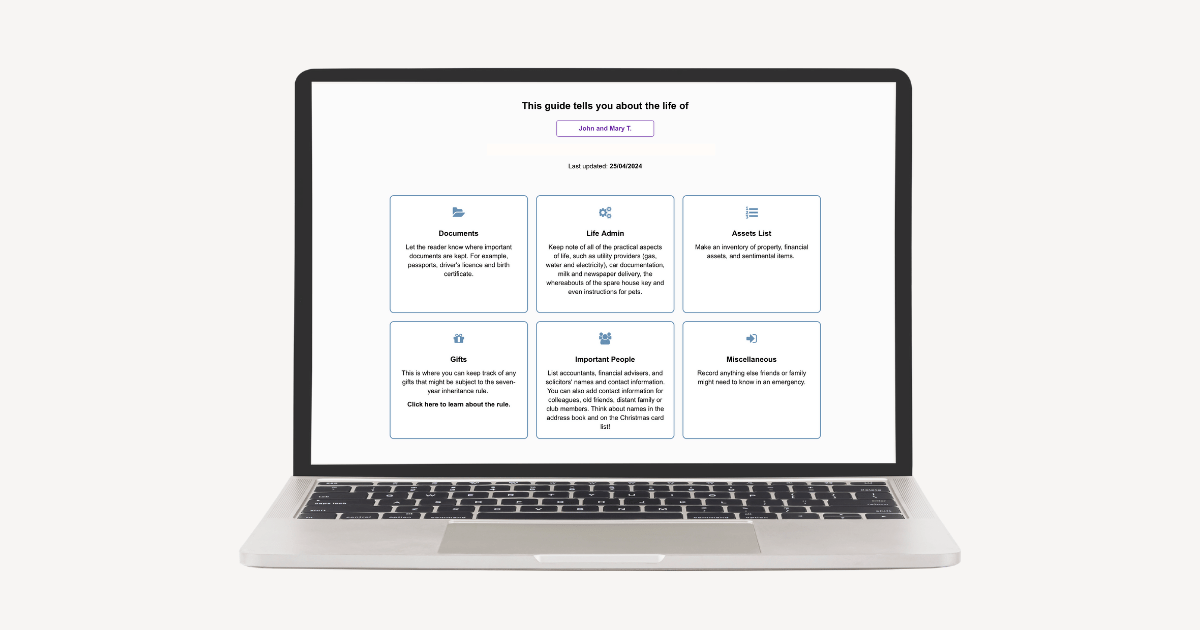
Rather than holding personal documents or sensitive information, it helps people record where things are kept, so the right people can find them when they need to.
It works like a private signpost. Clear, practical notes that point trusted family members or advisers in the right direction, without exposing private details to the internet.
Why this matters now
Concerns about fraud, data breaches and identity theft are no longer abstract. For many families, they’re a real consideration when deciding how to organise personal information.
That’s why PodVault avoids storing things like account numbers, full addresses or copies of documents.
Instead, people leave simple guidance such as:
- where legal documents are located
- who holds financial or insurance information
- where medical notes or key contacts can be found
Only those you personally choose to share access with can see this information, and they are people who already know you.
The aim is clarity without risk.
What people tend to record
Over time, most people use PodVault to keep track of a few key areas.
• Legal essentials, like where a will or power of attorney is kept.
• Financial and insurance contacts, without sensitive detail.
• Medical or emergency information that may be needed quickly.
• Household notes that help someone else step in with confidence.
• Personal preferences that are easier to write down than say out loud.
The goal isn’t to centralise everything. It’s to remove uncertainty.
Less guesswork, more calm
When information is clearly signposted, everyone feels more at ease.
Families know where to look.
Advisers don’t have to rely on memory or assumption.
And individuals gain peace of mind knowing things are organised, without having shared more than they’re comfortable with.
It turns “I think it’s somewhere” into “I know exactly where to look”.
Organisation that supports real conversations
PodVault isn’t about replacing family discussions or professional advice. It’s about supporting them.
By making information easier to find, conversations become calmer and decisions less pressured.
In a digital world that often asks us to share more than we’d like, sometimes the most secure solution is simply knowing where things are, and who to tell.